States Are Moving to CBV. Choose a Partner That’s Proven.

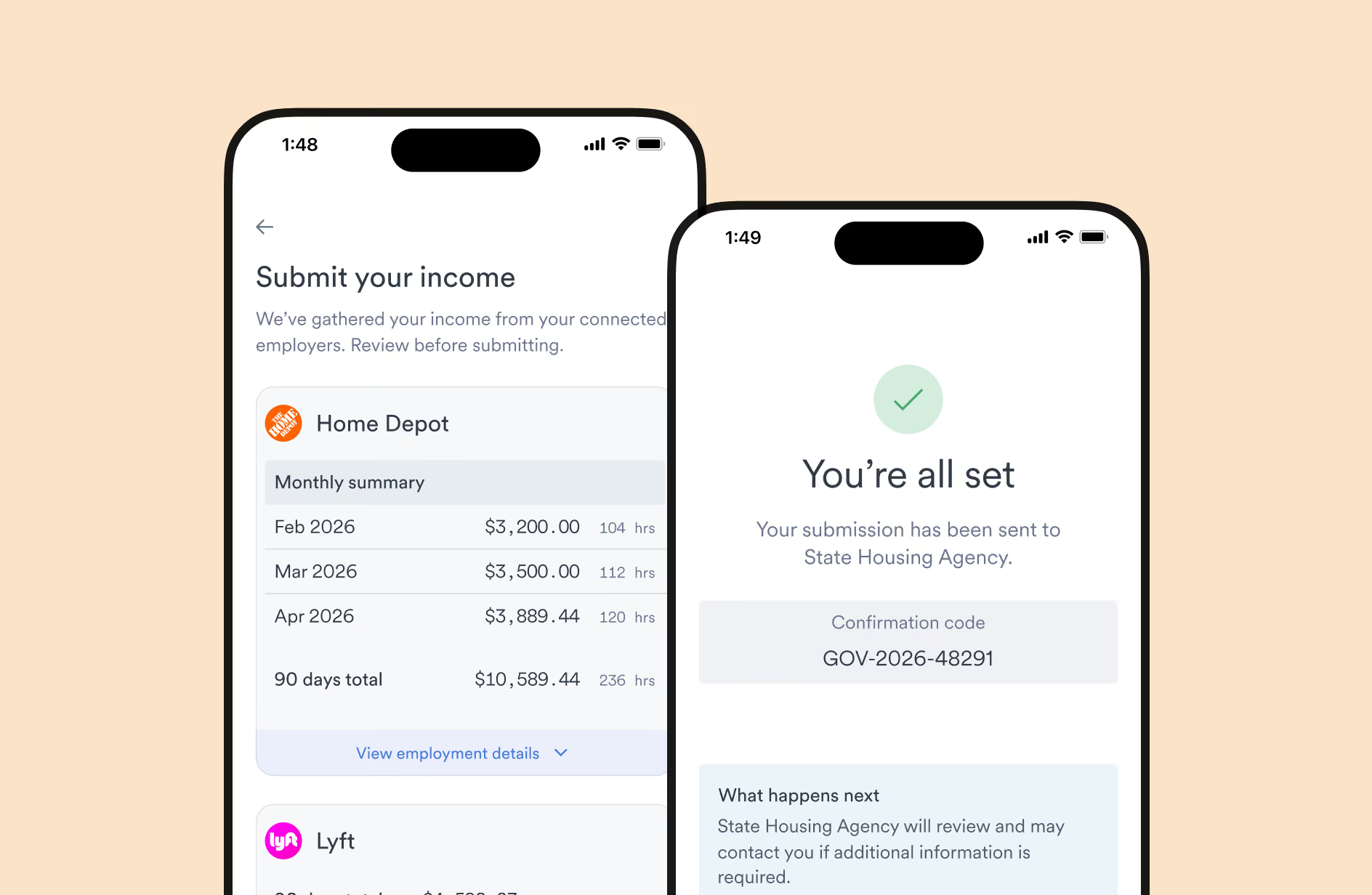
On July 4, 2025, President Trump signed H.R. 1 — the One Big Beautiful Bill Act — into law. For states running Medicaid and SNAP programs, the message was unambiguous: the way you verify benefits eligibility is about to change, and the timeline is not forgiving.
The law mandates that states implement Medicaid community engagement (work) requirements by January 1, 2027, requiring non-exempt adults aged 19–64 to document at least 80 hours per month of qualifying work, education, or community service to maintain coverage. States must verify compliance at application, at redetermination, and at least every six months thereafter — using payroll data and other reliable sources wherever possible, without requiring applicants to submit redundant documentation.
SNAP is changing too. H.R. 1 broadens and tightens existing SNAP work requirements. Without altering the statutory recertification timeline, it impacts verification processes and complexity, and it imposes a shift in administrative cost sharing that will make every inefficiency in the eligibility process more expensive for states to absorb.
The stakes are significant. The Congressional Budget Office estimates H.R. 1's work requirement provisions will reduce federal Medicaid spending by $326 billion over ten years — with coverage losses concentrated among the people least able to navigate a paper-heavy, slow-moving process.
States have roughly seven of 18 months remaining to build the infrastructure to comply. The question isn't whether to modernize verification. It's who to trust to help you do it.
Picking the right provider matters
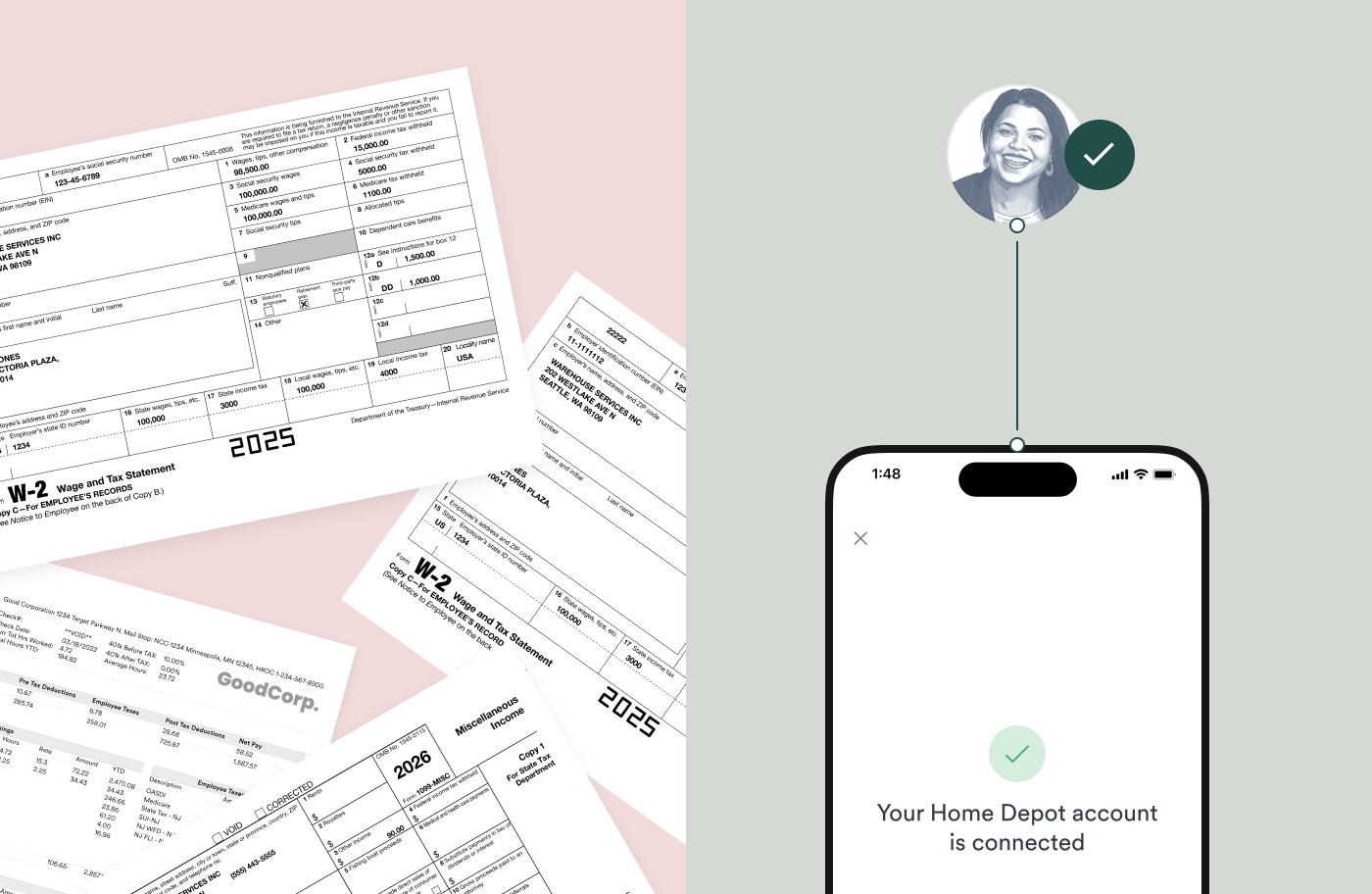
Most states already know their legacy verification solution isn't built for what's coming. Manual processes, static databases, employer callbacks, manual document reviews, and solutions that can't handle gig workers, variable income, or multi-employer pay profiles — none of that survives at scale with the new work requirements.
Consent-based verification (CBV) has emerged as the path forward — and most states are already moving in that direction. The question is no longer whether to adopt CBV. It's which provider to trust with the implementation.
That distinction matters more than it might seem. What actually separates providers is everything around it: the breadth of coverage, the share of applicants who can successfully connect, and the level of support behind both. The right partner doesn't hand off a contract and disappear — they stay close to your program, bring dedicated support to your caseworkers and implementation team, and keep improving as requirements and needs evolve.
Coverage, hit rates, and the reliability of your service partner are what determine whether a CBV rollout works in practice, not just in a demo.
Argyle was built for exactly this moment.
Argyle CBV for States & Government Agencies
Argyle is the leading platform for consent-based verification — it's not one of many things we do, it's the only thing we do. That focus shows in the results: fast, easy to implement, cost-effective at scale, and built for the long run.
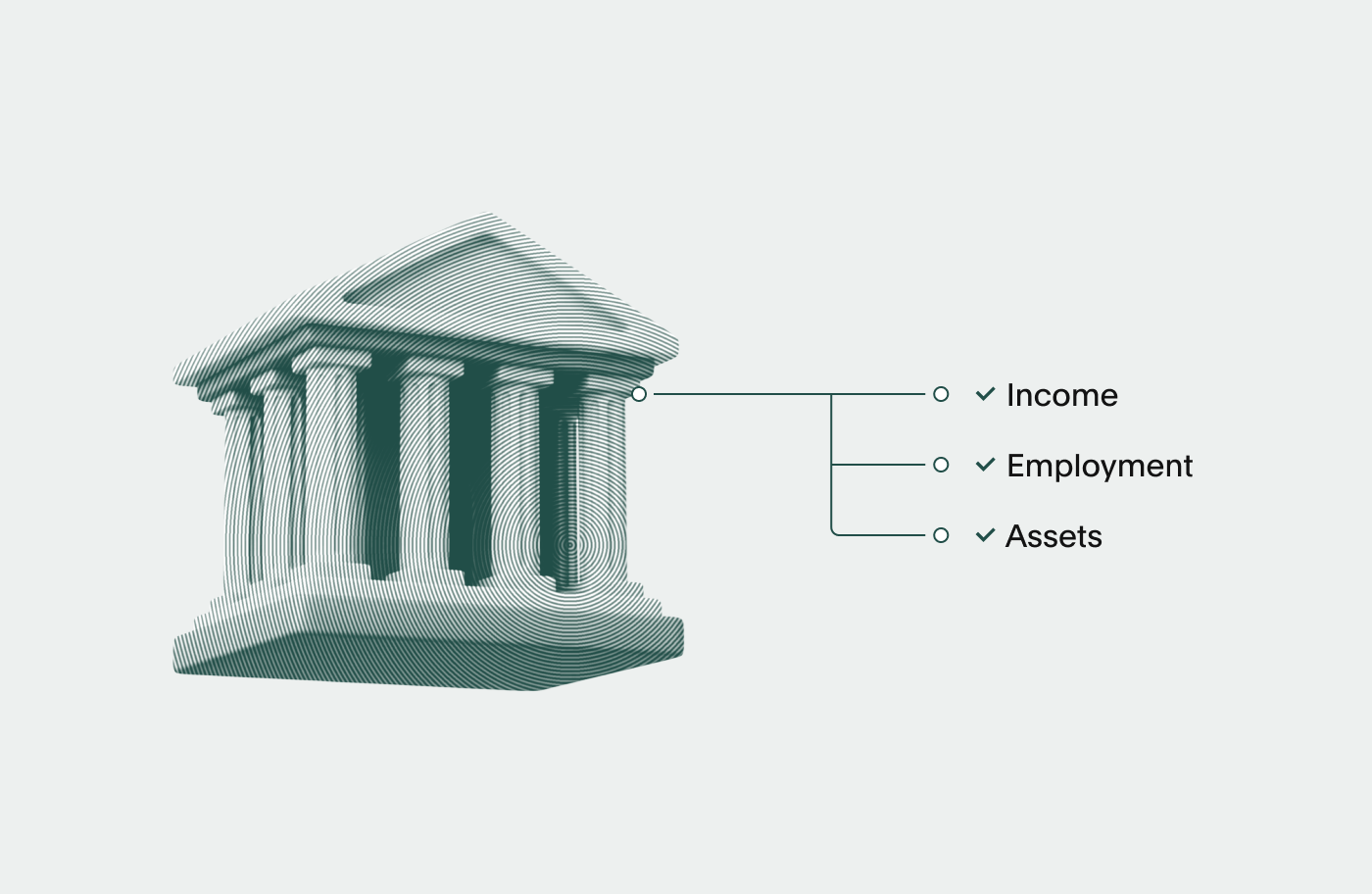
We've proven the model in mortgage — more on that later — and taken what works there to meet the specific demands of benefits eligibility. The result is a single-source CBV solution that gives agencies access to the data they need across income, employment, assets, and education, without stitching together multiple vendors or managing multiple integrations.
Argyle is active in 10+ states, available as a standalone solution within state eligibility and renewal workflows, and works with leading implementation partners including Nava, SteadyIQ, Gainwell, Digital Public Works, AidKit, and can be leveraged as part of CMS' Emmy product. We support programs across SNAP, Medicaid, TANF, SSA, and more.
A closer look at some of our government-ready features:
Applicant Connected and Certified. Agency Ready.
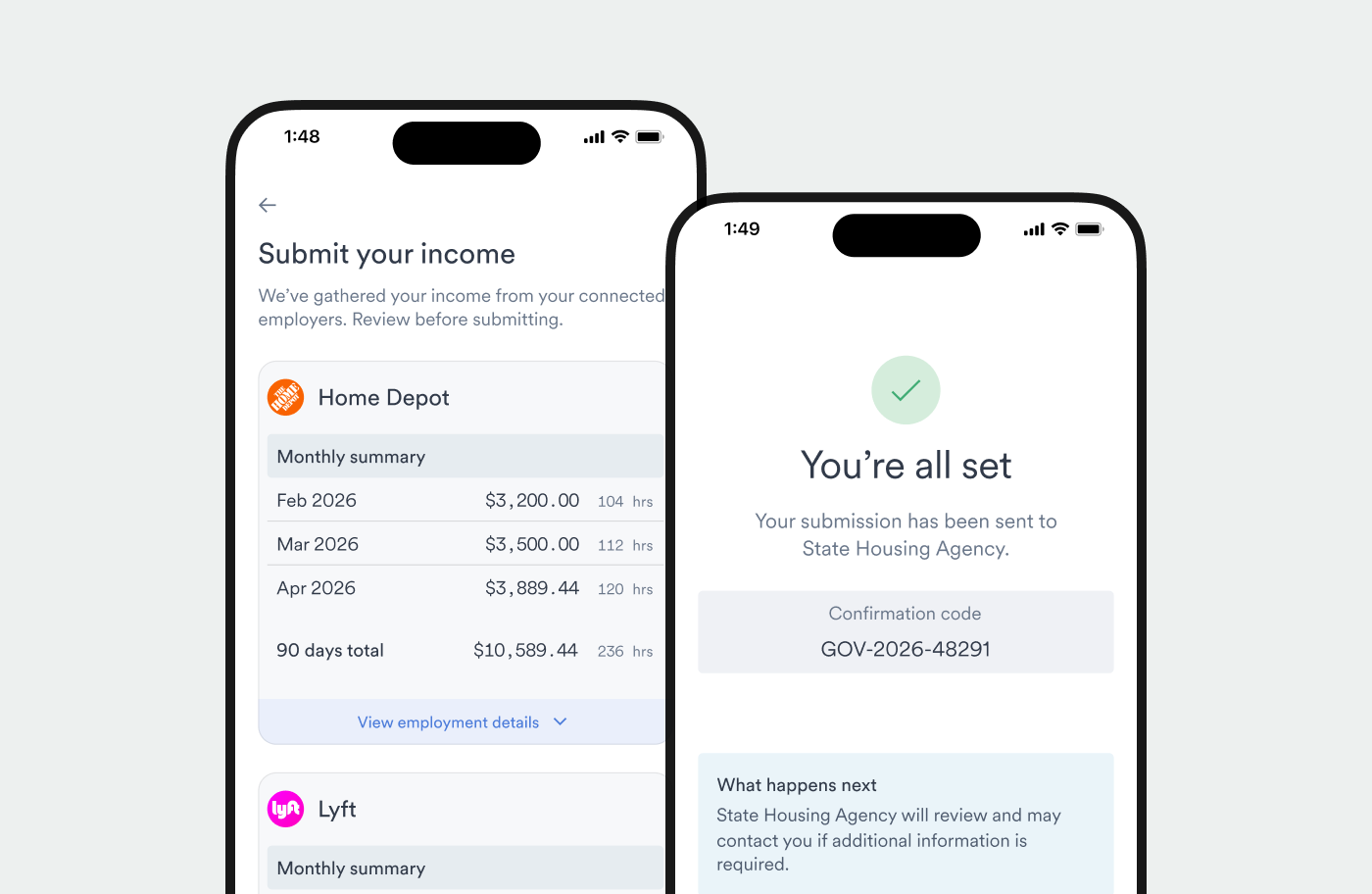
The core of Argyle's government solution is a consent-based verification (CBV) workflow that allows applicants to securely connect their payroll, employer, bank, and education institutions and gives agencies what they need to verify benefit eligibility.
When an applicant connects their data and certifies its accuracy, Argyle delivers the certified report directly to the agency upon receipt — no additional paperwork, no follow-up requests, no delays between application and determination.
The workflow handles the full complexity of how people actually earn: gig income, multiple employers, part-time work, variable pay schedules. Applicants move through a single, intuitive experience. Caseworkers get direct-source, certified data the moment it's submitted.
Benefits-Ready Government Reports
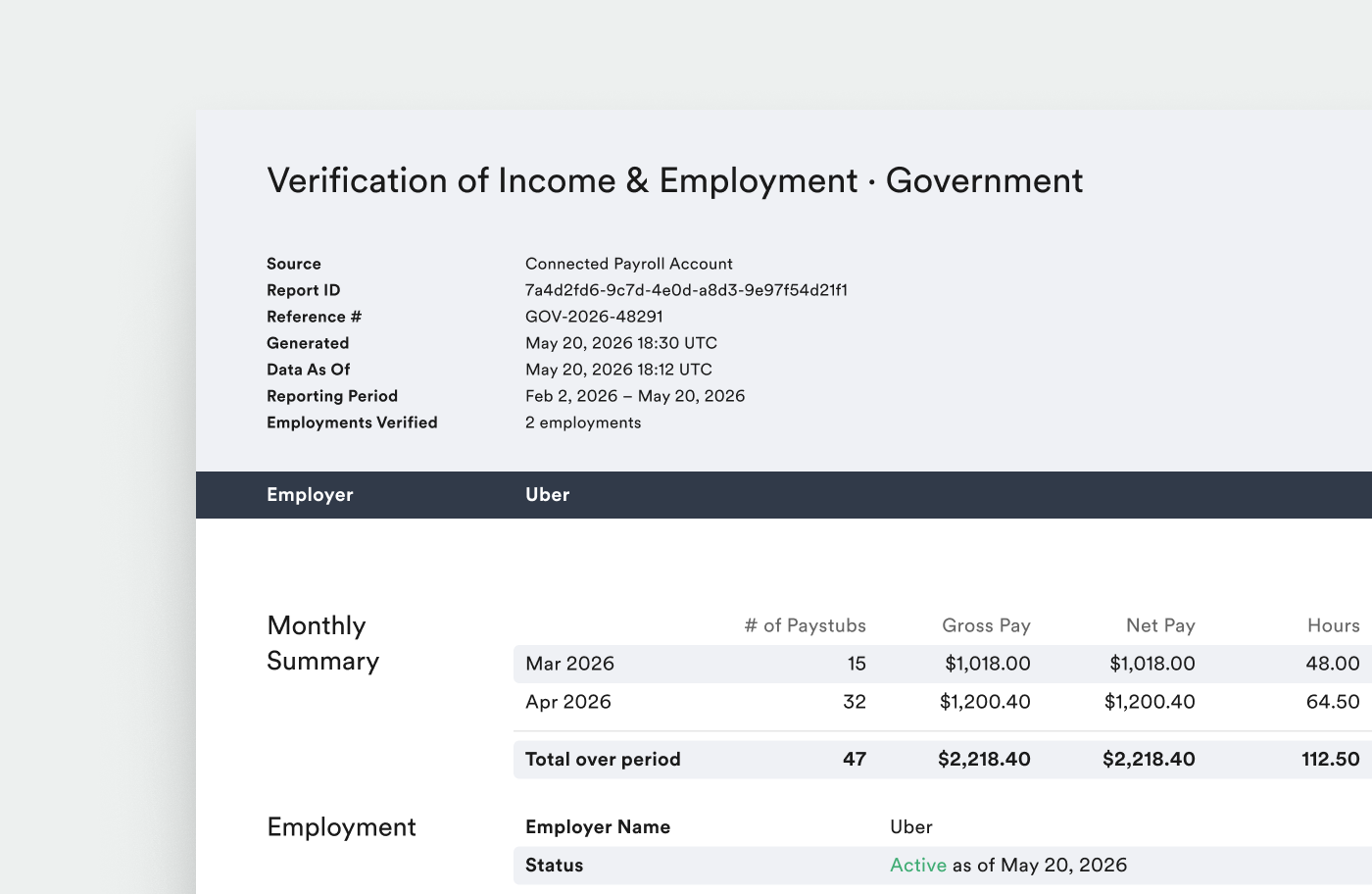
Not every caseworker needs raw payroll data. What they need is the right information, organized for how they actually make decisions.
Argyle's benefits-ready income report is built specifically for Medicaid, SNAP, and other government program workflows. It's designed to surface the information caseworkers need without requiring them to interpret raw records or do manual calculations.
The report includes configurable lookback periods to match each program's specific eligibility window, monthly income summaries alongside paystub-level detail, and comprehensive coverage of income type — including variable earnings, irregular schedules, and multiple employers consolidated into combined totals.
Output is available in PDF or JSON, so it fits into existing caseworker interfaces as easily as it fits into automated eligibility systems. And when an applicant's income picture is complex — multiple part-time jobs, seasonal work, tips alongside a base wage — Argyle handles it. One report. The full picture.
Optional Data Refresh with One-Click Reauthentication
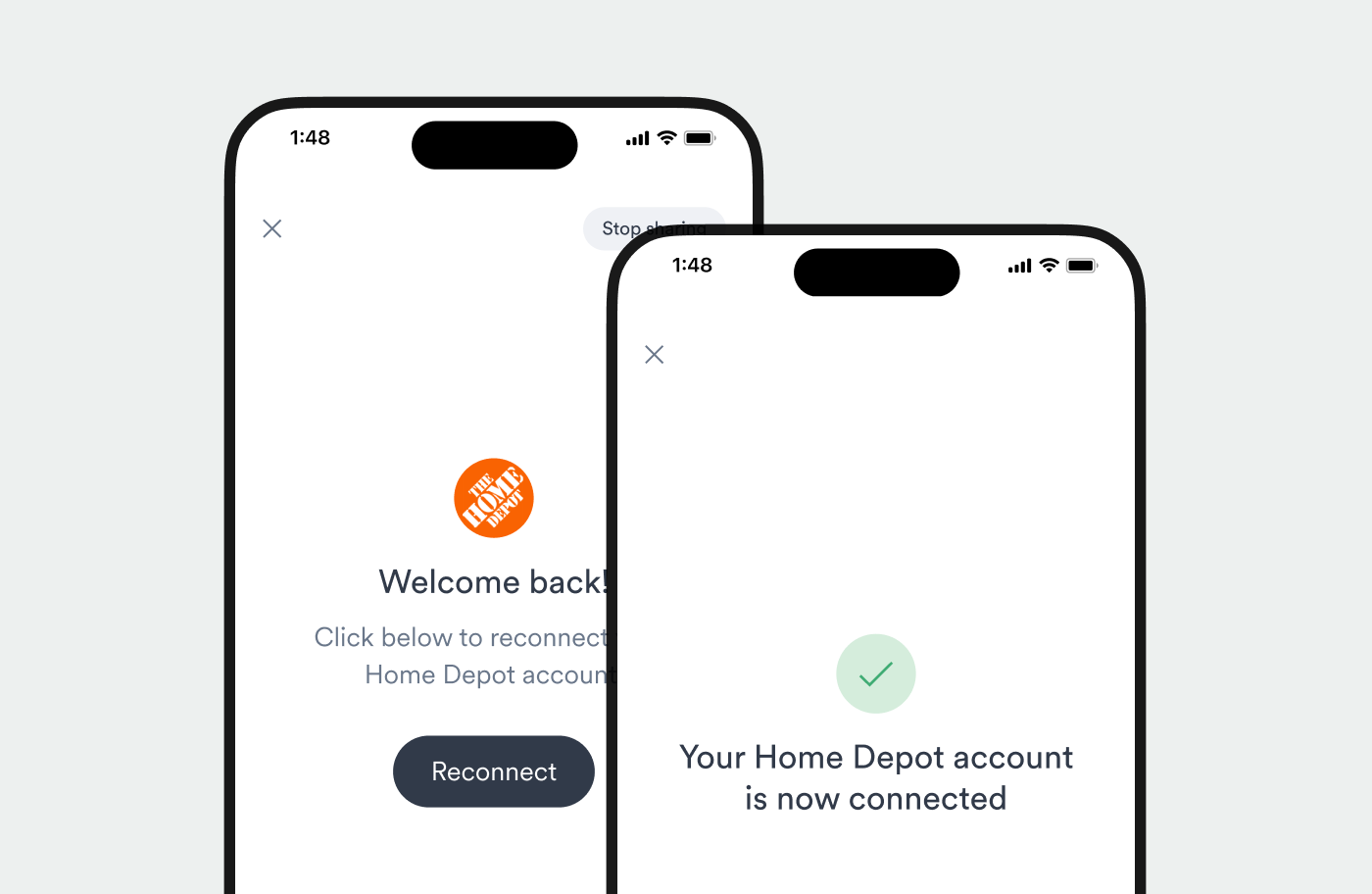
Eligibility isn't determined once. Under H.R. 1, states must verify compliance at initial determination and at redetermination — and may verify more frequently. For programs that run continuous verification or regular refresh cycles, that means a returning applicant may need to reconnect their payroll data multiple times.
When data refresh is enabled and a reconnection is needed, Argyle makes it frictionless. Returning applicants can reauthenticate with a single click — no re-entering credentials, no starting over, no drop-off at the reconnection step.
Income data stays current. Caseworkers stay unblocked. And the administrative overhead of keeping eligibility data fresh doesn't fall on the applicants who can least afford it.
Enhanced Employer Search
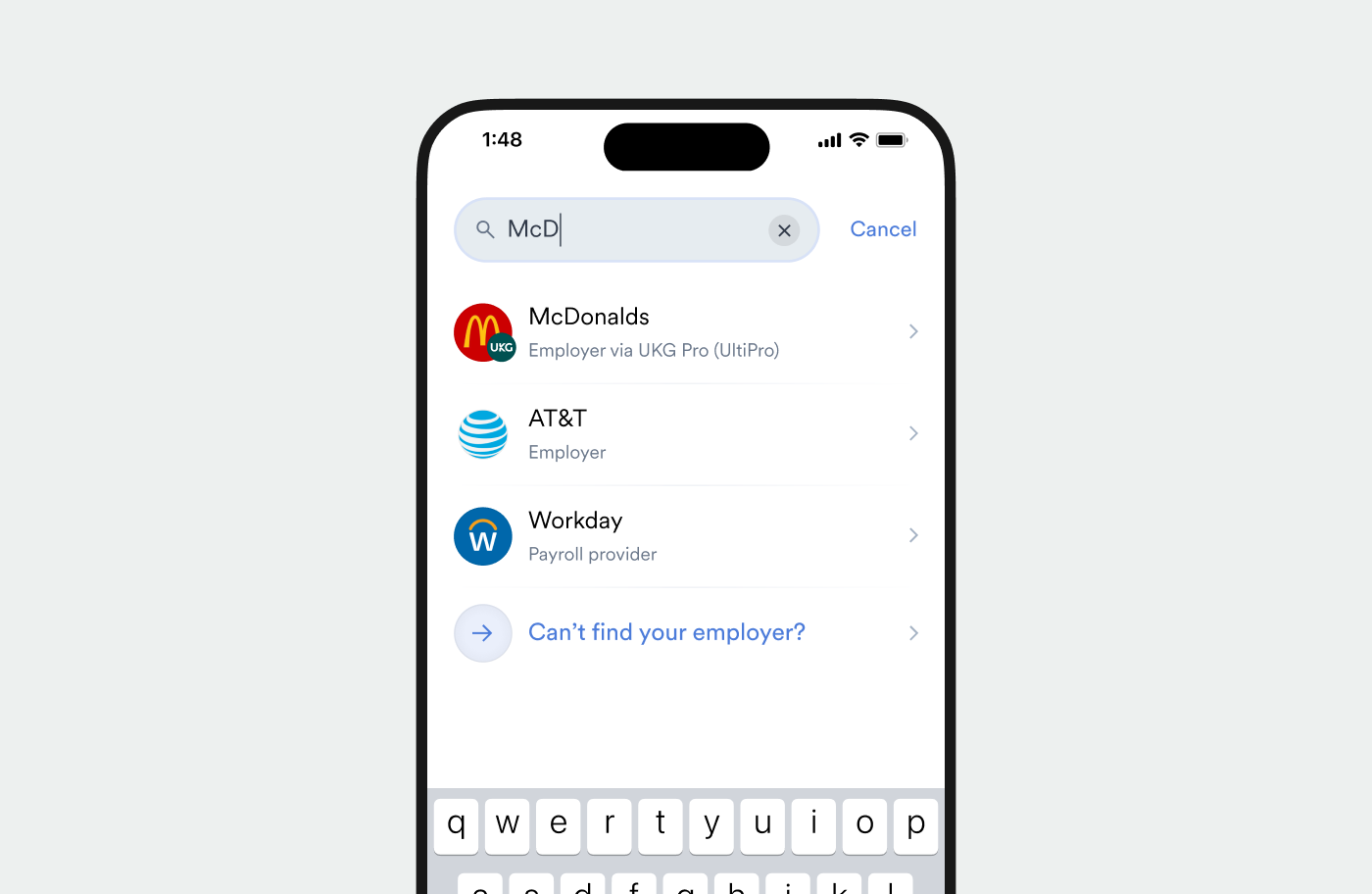
Finding your employer sounds simple. In practice, it's one of the most common points of friction in any verification workflow — particularly for applicants who work at franchises, similarly named businesses, or companies with multiple operating entities.
Argyle's enhanced employer search uses improved algorithms and smart filtering to make it significantly easier for applicants to locate the right employer on the first try. The result is broader payroll coverage and a smoother connection experience — fewer drop-offs, fewer cases that fall back to manual review, and more applicants successfully verified at first contact.
Built on a Track Record in CBV
Argyle didn't start building consent-based verification infrastructure for government. We built it for mortgage — one of the most scrutinized, compliance-intensive verification environments in financial services — and proved it there first.
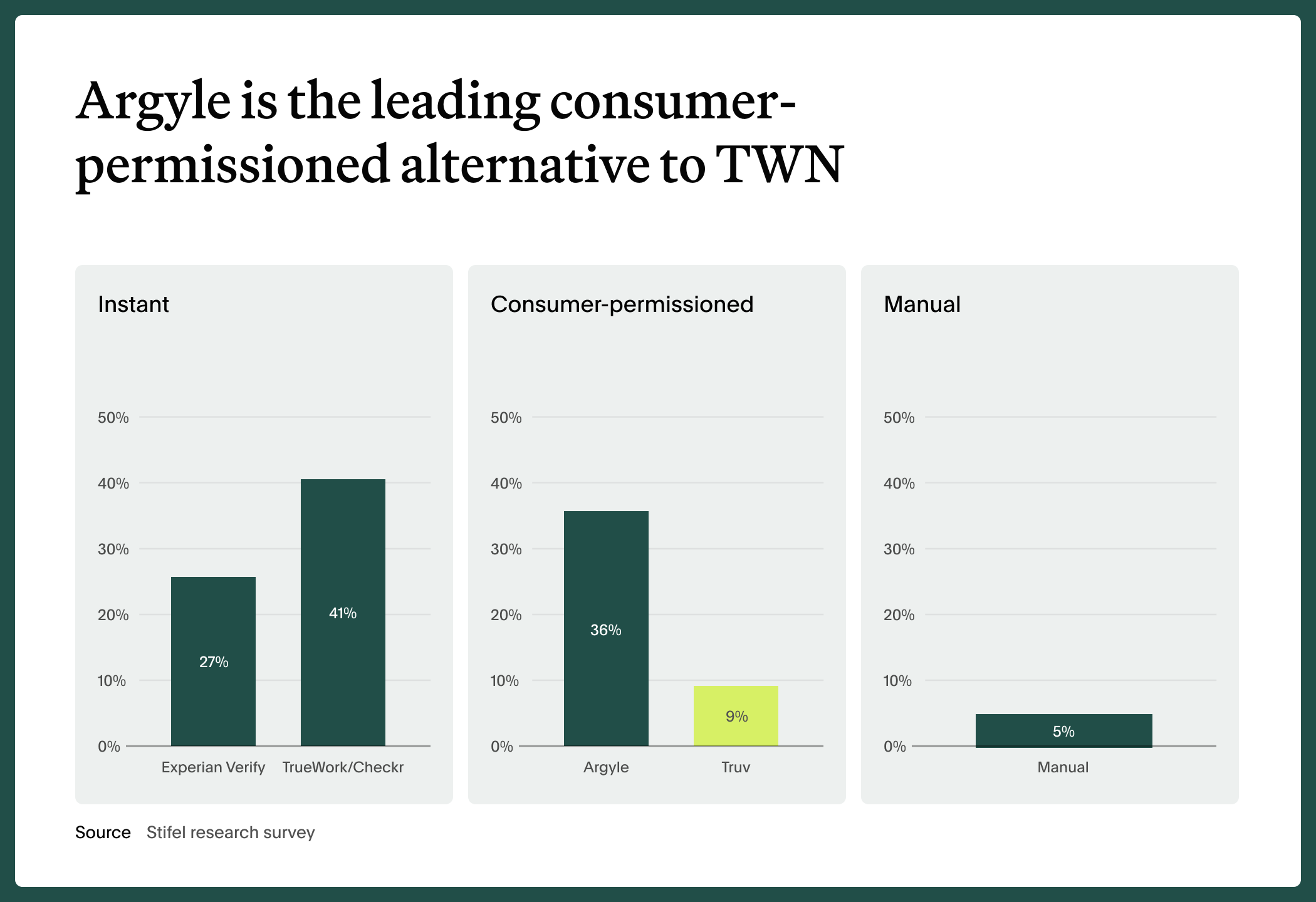
Today, Argyle is the leading CBV platform for mortgage — and the numbers back it up. A recent Stifel Research survey found that 43% of companies are shifting volume away from Equifax/The Work Number — and Argyle leads as the top CBV/consumer-permissioned alternative they're moving to, winning on coverage, cost savings, applicant experience, and best-in-class support. With integrations across 10+ leading mortgage systems including Encompass and nCino, and data that meets Day 1 Certainty® and LPA℠ AIM standards, Argyle has become the platform lenders trust to get it right.
The reason that matters for government isn't just credibility. It's infrastructure. The payroll connectivity, the data quality controls, the consent management, the audit-ready records — everything Argyle built to satisfy GSE requirements and lender compliance teams is the same infrastructure powering our government verification products. We didn't build a new thing for government. We adapted a proven one.
Agencies working with Argyle aren't adopting unproven technology. They're adopting technology that has already processed millions of verifications under demanding conditions — and building on top of it.
The Window Is Narrow
States have until January 1, 2027 to have Medicaid work requirement systems operational. CMS issued initial guidance in December 2025, with additional guidance expected in 2026. Implementation timelines for procurement, integration, and testing are compressing fast.
The agencies that will be ready are the ones that start now — with a partner that understands both the policy requirements and the operational reality of deploying verification infrastructure in a government context.
Argyle is ready to help. If you're working on benefits eligibility modernization — at a state agency, a systems integrator, or a policy organization — we'd like to talk.