The Case for Switching: Why Tenant Screeners Are Moving to Argyle


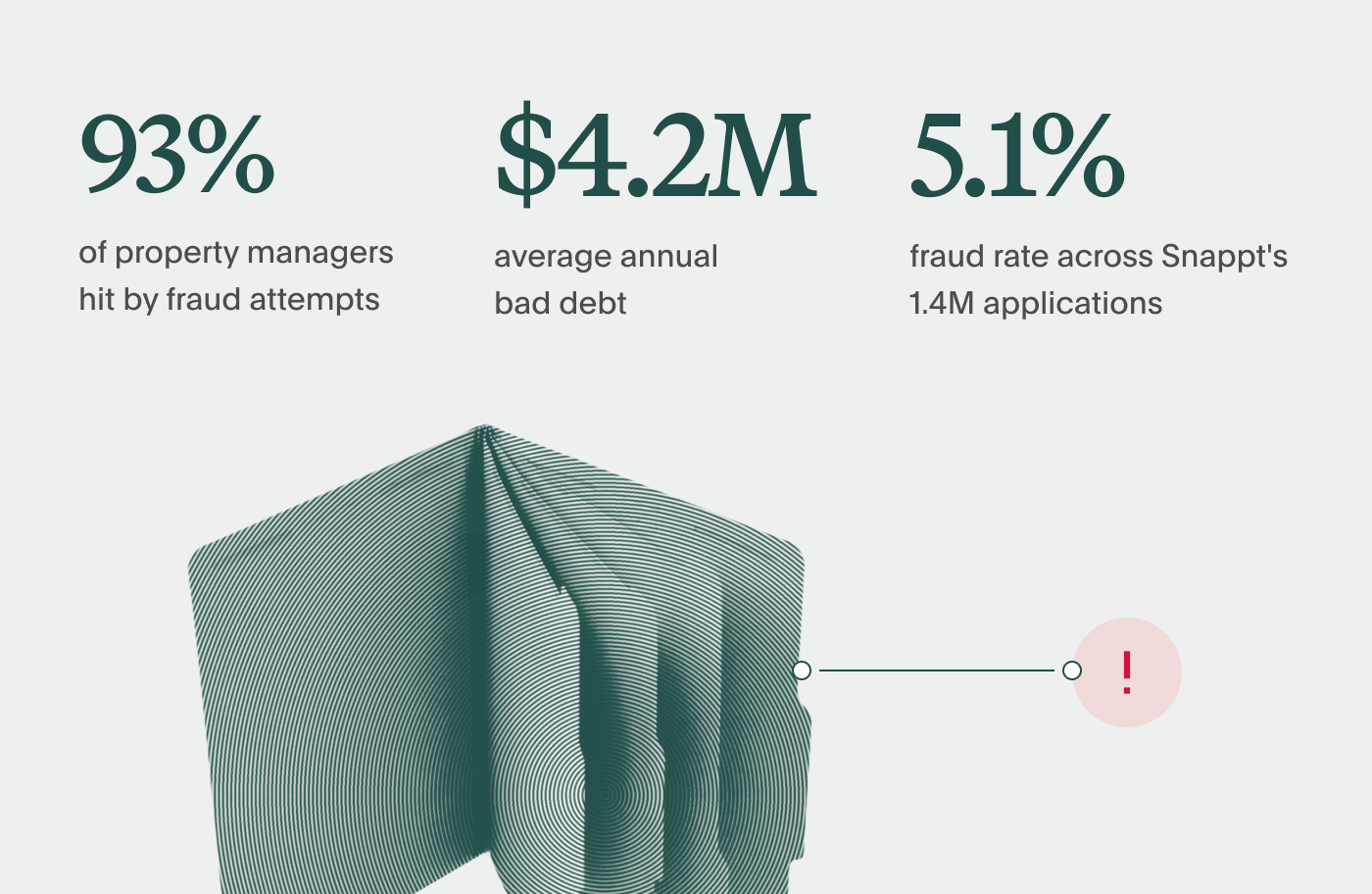
Rental application fraud is no longer an outlier problem. According to a 2024 NMHC survey, 93% of property owners, managers, and developers encountered at least one attempt at application fraud in the past year, and NMHC's Pulse Survey puts the resulting bad debt write-offs at close to $4.2 million a year for the average property owner or manager. Snappt's own 2026 Multifamily Fraud Report found an average fraud rate of 5.1% across more than 1.4 million applications reviewed, with over 86,000 edited documents flagged. Paystubs are easy to open in a PDF editor and hard to trust once they've been touched.
That's the backdrop driving a real shift in how tenant screening platforms verify income and employment. More of them are moving away from document uploads and toward consumer-permissioned data pulled straight from payroll and banking systems, and a growing number are building that on Argyle. Below, we get into why, including a closer look at how Argyle's Direct Payroll solution actually works, how it stacks up against reseller options like Plaid, and how pairing it with Argyle's Banking solution closes the gap when you need more than payroll data.
The problem with the way most screeners still verify income
For most of the industry, income verification still means asking an applicant to find, download, and upload a paystub, a bank statement, or an offer letter. That process has three problems at once.
It's slow. Applicants have to track down documents, and screeners have to review them manually, which adds days to a process that's supposed to move fast in a competitive rental market.
It's fraud-prone. A PDF paystub is trivially easy to edit, and Snappt's own fraud report shows how often that's exactly what's happening.
And it excludes people. Applicants who work for companies with proprietary payroll systems, or who piece together income from a few gig platforms, often can't produce a standard paystub at all, even when their income is perfectly real.
Payroll data providers aren’t all equal
Here's the part that matters most if you're evaluating providers: not all payroll connectivity platforms provide the same coverage and data quality.
Argyle connects 91% of the U.S. workforce through consumer-directed payroll connections to payroll and employer systems. When a consumer connects an account through Argyle, they're logging into their own payroll or employer portal, and the data comes straight from that source in real time.
Plaid's payroll and income offering works differently. After Plaid's own attempt at building direct deposit switching didn't take off, the company turned to outside partners to fill the gap: Pinwheel became Plaid's preferred provider for direct deposit switching and payroll data, and Plaid has also leaned on Atomic to round out its coverage. As Fintech Takes put it, Plaid has been "partnering with its former competitors to enrich its payroll data" rather than provide direct connectivity itself.
That difference shows up in what you actually get. When your payroll data runs through a chain of vendors instead of a consumer directed connection, you inherit every gap, delay, and support ticket that comes with each additional link in that chain. One direct-source provider means one place to look when something breaks, one team accountable for coverage and accuracy, and one company with a clear incentive to keep building out connections rather than patching gaps with whoever's willing to license you their data. That's the case for a growing number of tenant screening platforms choosing to switch to Argyle.
.png)
A closer look at Argyle's Direct Payroll solution
Direct Payroll is doing the heavy lifting for most of the screening platforms, so it's worth walking through what it actually does.
An applicant connects their payroll or employer account the same way they'd log into it directly, choosing their employer or payroll provider from Argyle's network. From there, Argyle's Direct Payroll delivers real-time, consumer-permissioned data on income, employment status, and job history, structured across more than 170 standardized fields, so your team can verify income and employment on data that's current rather than a snapshot from whenever a paystub happened to be generated.
Two details make it particularly well-suited to tenant screening specifically. First, coverage extends beyond traditional employers to gig and platform work, including Uber, Lyft, DoorDash, and Instacart, along with companies running proprietary payroll systems, like USPS, Home Depot, and Microsoft, that don't produce a standard paystub at all. Second, an applicant can connect more than one income source in the same flow, which matters for the growing share of renters piecing together income from a primary job and one or more side platforms.
The power of payroll and banking data
Payroll data is the strongest source for verifying an active job and its income, but it isn't the whole income picture for every applicant. Renters with cash tips, P2P income through apps like Venmo or Zelle, or income types that don't run through a traditional payroll system need another path.
That's where Argyle's Direct Banking solution, powered by Finicity's open finance technology from Mastercard, comes in. It gives your team direct-source, consumer-permissioned access to bank account data, including up to 24 months of transaction history, so you can verify assets and see income that never touches a payroll system, including rent payment history that shows how an applicant has actually handled housing costs in the past.
Run together, Payroll and Banking data give tenant screening platforms one workflow that covers traditional employment, gig and platform income, and bank-verified assets and cash flow, all through direct-source data and a single vendor relationship instead of stitching together separate tools for each income type.
Why more tenant screening platforms are moving to Argyle
Everything above is how the pieces work. What follows is what changes once they're running in production.
Screening platforms that have moved off document uploads describe the payoff in three ways — and the one they lead with usually isn't fraud.
More applicants finish the application
Fraud defense is the reason most screeners start looking. Completion rates are the reason they switch. Every applicant who abandons an application mid-flow is a unit sitting empty longer, and "go find your last two paystubs" is where a lot of them stop.
Snappt, the applicant fraud detection platform used across more than 2 million apartment units, embedded Argyle into its application workflow so renters can connect their own payroll account instead of hunting down a document. Application completion rates rose 30%, and more than half of applicants who started a payroll connection finished it.
"Argyle allows more applicants to get through the Snappt workflow, which provides our customers with more applicants to rent apartments to, and that's a tremendous value," says Kyle Nelson, VP of Corporate Strategy at Snappt.
SafeRent Solutions saw the same pattern on speed. Income verification that used to take up to four days now takes hours, completion rates rose 10%, and nearly 60% of successful verifications now happen over SMS — applicants sharing their records from their phone, without a desktop or a scanner in sight.
Coverage that fits how renters actually earn
A paystub-based process quietly excludes people whose income is perfectly real. Applicants at employers running proprietary payroll systems — USPS, Home Depot, Microsoft — often can't produce a standard paystub at all. Neither can renters piecing together income from a primary job and a couple of platforms.
Argyle's consumer-permissioned verification data platform covers 90% of the U.S. workforce, including gig and platform work like Uber, Lyft, DoorDash, and Instacart. Applicants can connect more than one income source in the same flow, so a full-time job plus weekend delivery shifts arrives as one picture rather than two partial ones.
Nova Credit, which helps businesses build a fuller picture of applicant risk using alternative data, uses Argyle so renters can share their income and employment records directly from the source — including applicants whose profiles traditional screening methods struggle to read.
One flow instead of four vendors
Most screeners didn't set out to run four verification tools. It happened one gap at a time: a payroll provider here, a bank connection there, a document OCR vendor to catch the rest.
Argyle helps provide all of these solutions for your waterfall. An applicant connects their payroll account first; if that isn't the right path, they connect a bank account; if neither works, they upload a document that runs through OCR and authenticity checks. Argyle's Banking product, powered by Mastercard Data Connect, picks up what payroll can't reach — cash tips, P2P income through apps like Venmo or Zelle, assets, and rent payment history. One flow, one integration, one team to call.
"Argyle has consistently delivered the technology, support, and results we need. That level of trust isn't easy to earn, and it says everything about the strength of the partnership we've built," says Brook Price, President of SafeRent.
You can see more of Argyle's tenant screening, mortgage, and lending case studies on our customers page.
.png)
Where this leaves tenant screening
The direction of the market is pretty clear. Paystub uploads are slow and easy to fake. Verification providers that stitch together someone else's payroll coverage inherit someone else's gaps. And applicants increasingly need a path that works whether they're salaried, hourly, gig-based, or some mix of all three.
If you're evaluating how your platform verifies income and employment, or you want to see how Snappt, SafeRent, and other screening platforms have put Argyle's Payroll and Banking products to work, reach out to our team.