More Accurate Income Calculations, Cleaner Reports: Our Latest Banking Update

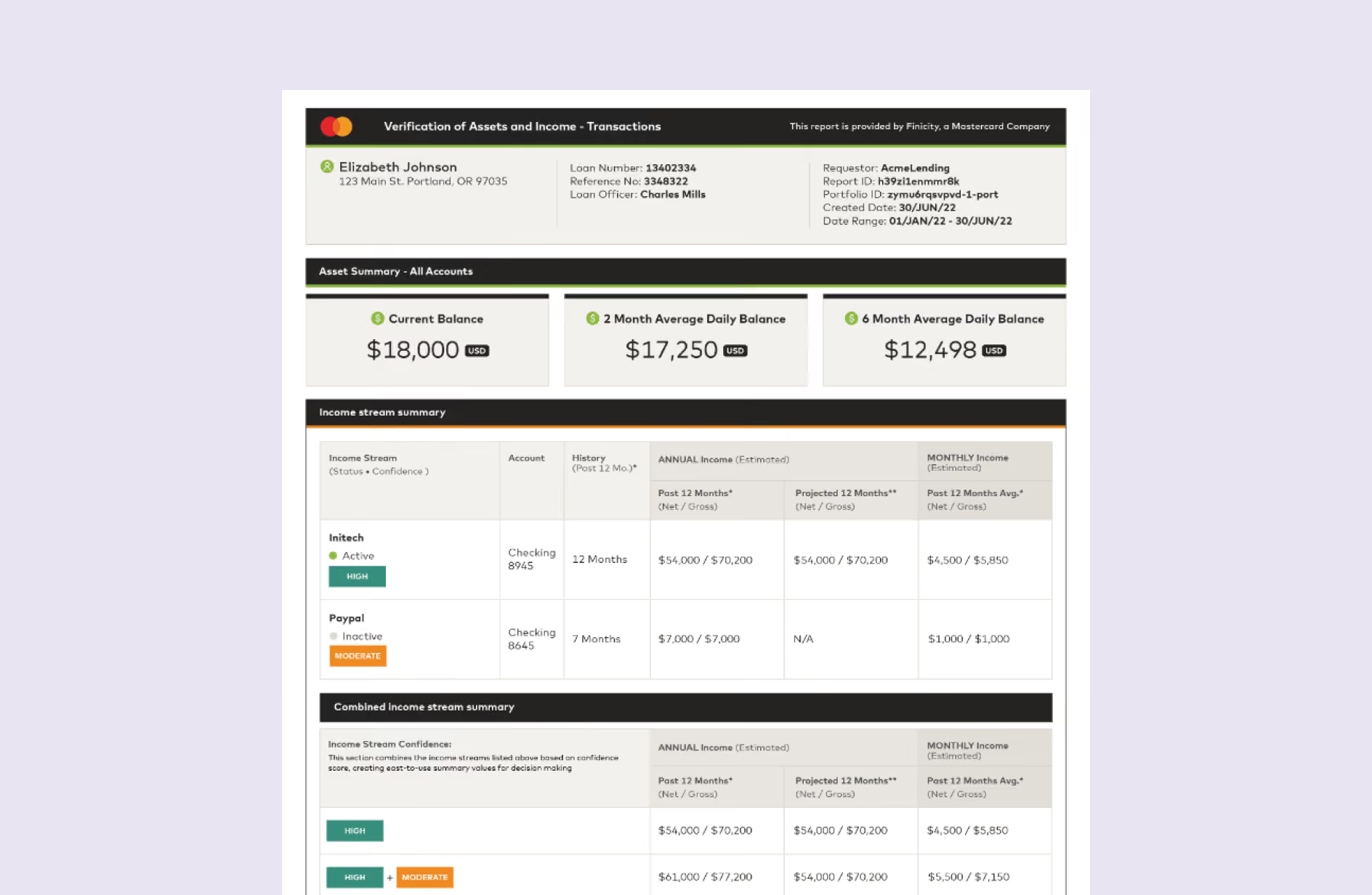
Mastercard rolled out a set of updates to their Banking income model and VOI/VOAI reports, including changes that improve how income is calculated, how income streams are identified and categorized, and how income data is presented.
Here's a breakdown of what changed.
A new VOI and VOAI report
The VOI and VOAI PDF reports have a new look. The redesigned format includes a simplified income summary, an improved layout, and better overall usability, making it easier for your team to review asset and income details quickly.
More accurate net-to-gross income calculations
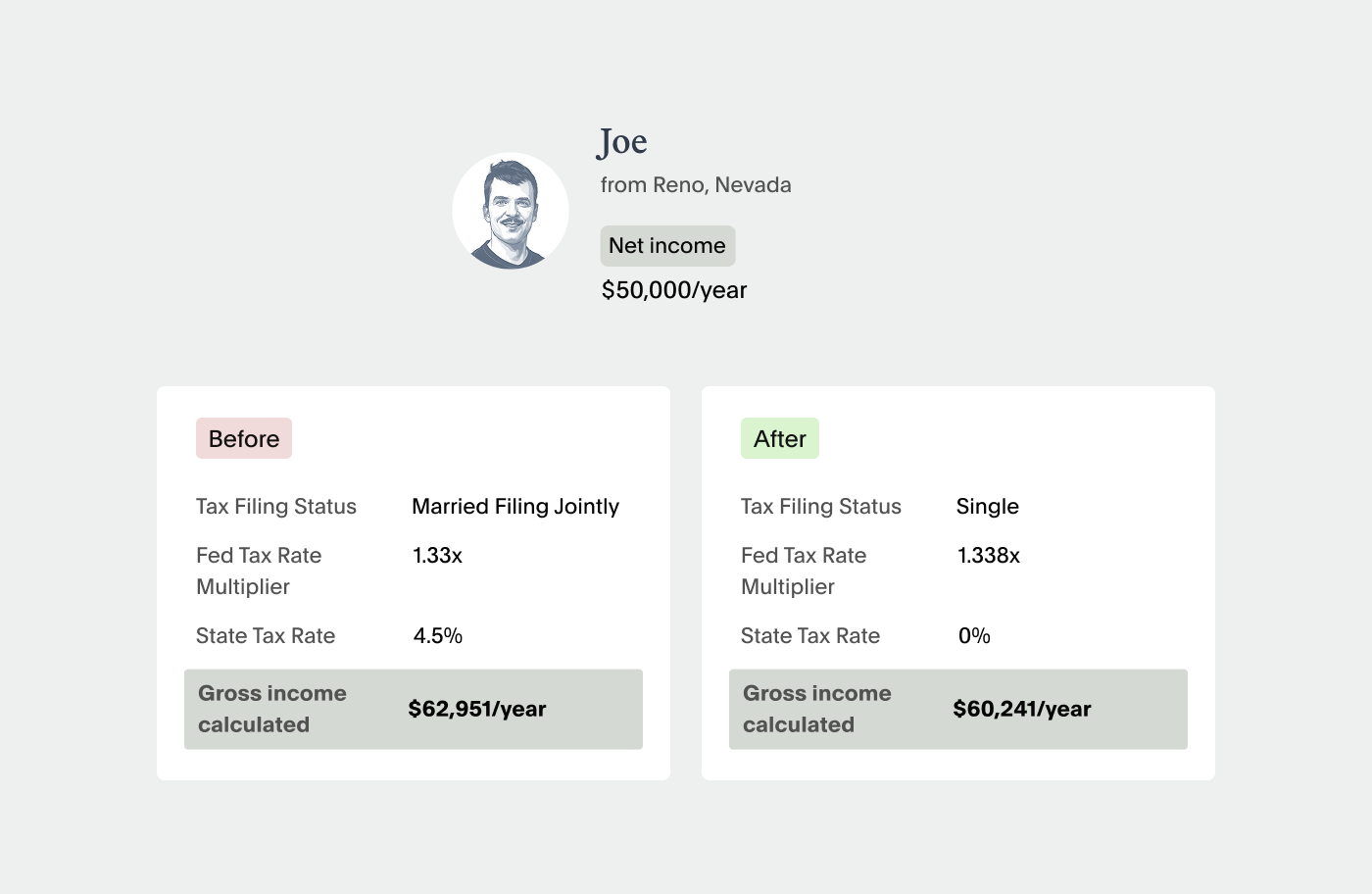
When an applicant's income arrives as bank deposits, it reflects what they actually take home after taxes— in other words, net income. To report gross income, Mastercard applies a multiplier that estimates the tax burden based on a set of assumptions about the consumer's filing status, tax rate, and withholdings.
The updated calculation better accounts for those likely to be for single filers and lower-income earners.
Federal tax brackets have been recalibrated, state-specific tax rates now replace the old flat rate, and certain income types like tax refunds and government benefits won’t have a gross income calculation applied.
Special income streams evaluated for recurrence
Previously, any deposit from a P2P source (Venmo, Zelle, PayPal) or a check/cash source was automatically included in a single bucketed income stream and often projected forward.
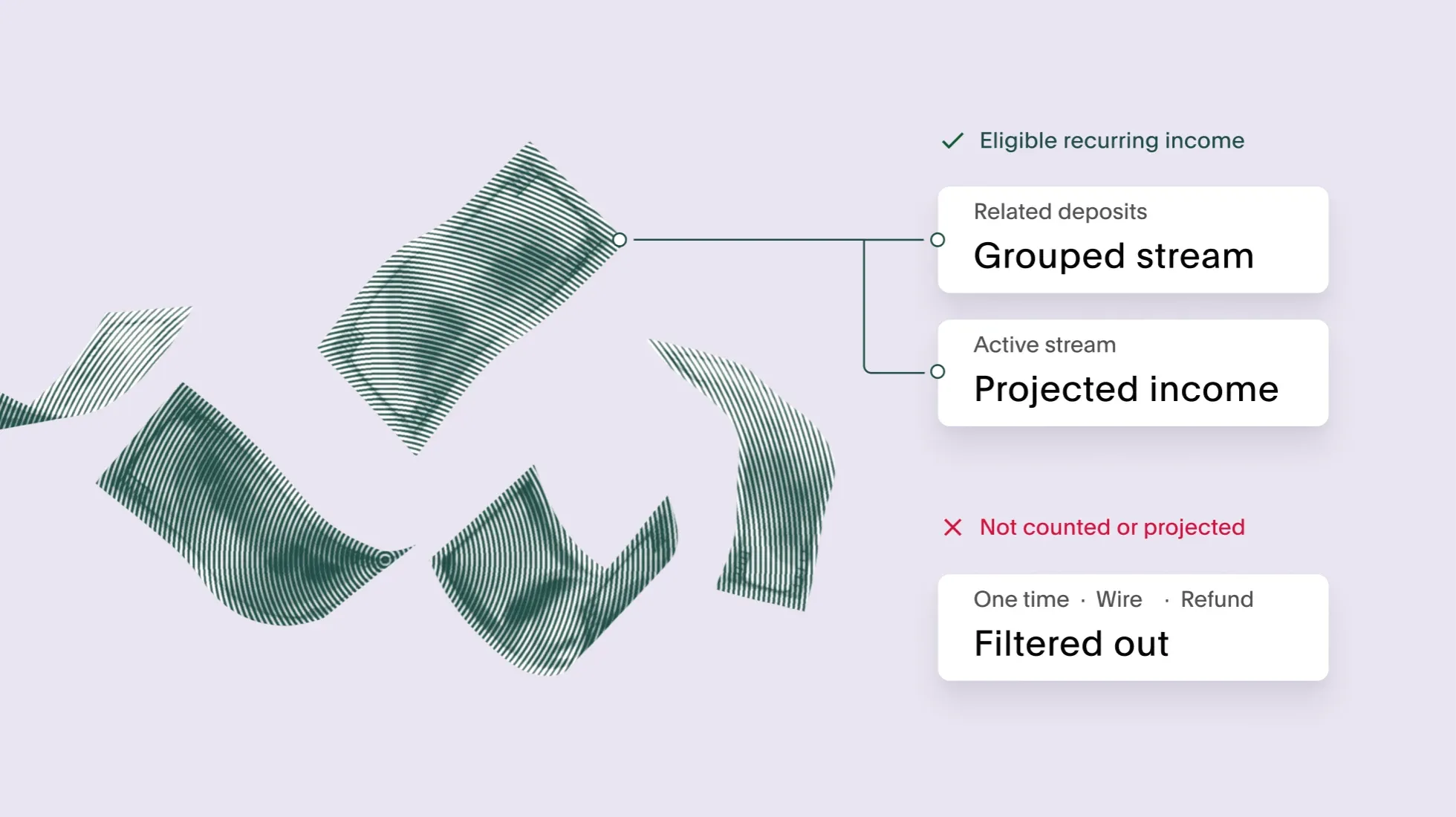
All of these transaction types now have their own income streams and are evaluated for consistency and recurrence, using the same criteria applied to paycheck income. Recurring deposits from the same source can be recognized as a legitimate income stream. One-off transfers are filtered out and not counted as income.
Updated next-generation entity service model
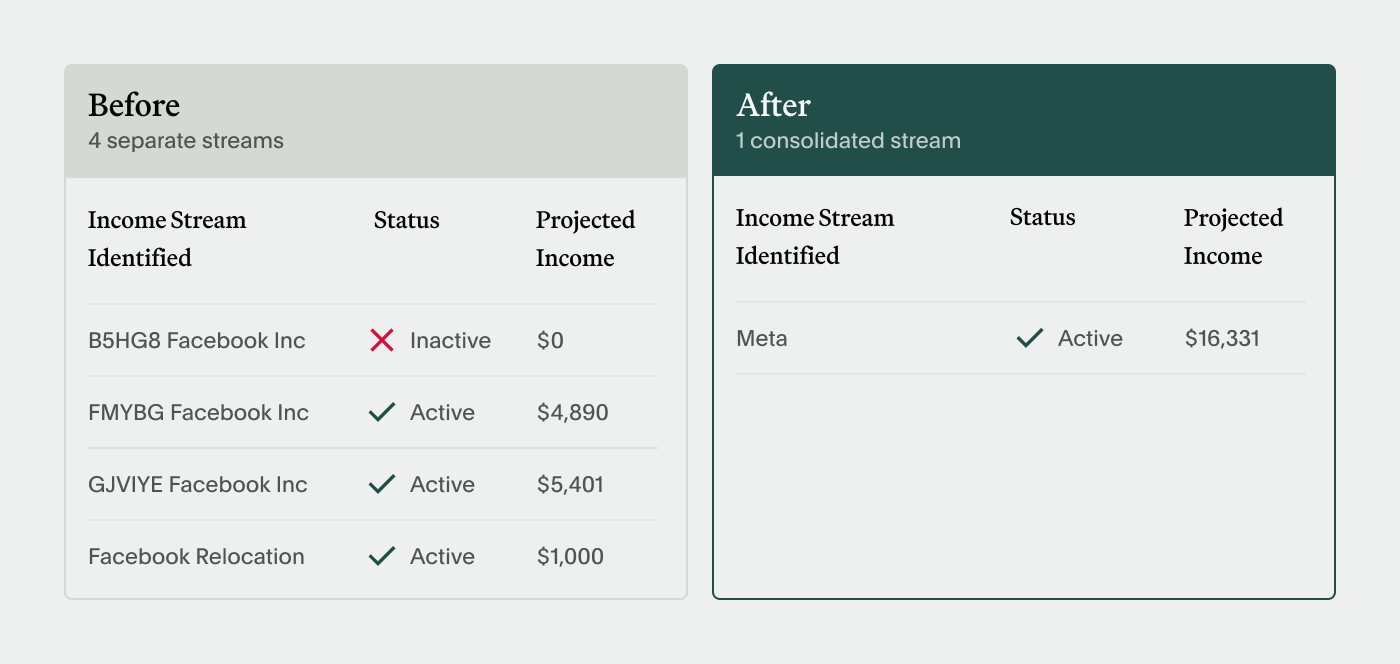
The entity service is how Mastercard identifies the source of a consumer's deposits and uses the entity value to group related deposits together for income assessment.
The new entity service better recognizes entity names from transaction data and introduces standardization of common names such as Amazon or Facebook (Meta), significantly improving deposit grouping and reducing instances of split streams. This means fewer income streams overall, but a more accurate view of entities and projected income.
Improved variable income projection
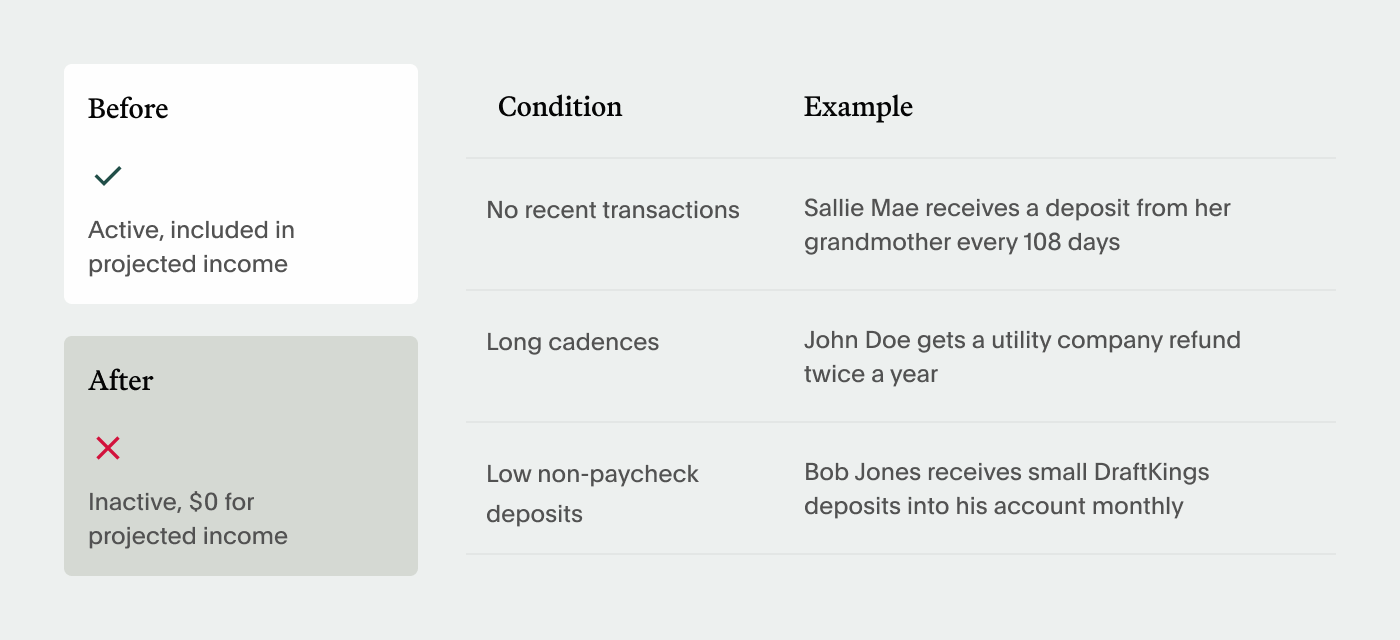
Moderate and low confidence income streams marked "active" are projected forward as future income. Historically, infrequent or irregular deposits could still be flagged as active. Things like a twice-yearly utility refund, an occasional gift, or small gaming deposits, which sometimes led to overstated projected income.
Three new conditions now automatically mark a stream as inactive and exclude it from projections: no deposits in the past 100 days, deposits arriving more than 100 days apart, or total deposits under $750 over three months for anything that isn't a paycheck. The result is projected income that's based on what an applicant consistently earns and not infrequent deposits.
New gross income API fields
Income streams now include two new fields: gross_monthly_income and average_monthly_income_gross. Previously, only net monthly figures were returned. These fields give service providers a more complete picture of applicant income.
What this means for your team
These banking updates give your team a more accurate, direct-source view of applicants' income streams to verify against. The changes are particularly meaningful for applicants with non-traditional income (P2P payments, gig work, multiple deposit sources) as well as single filers and lower-income earners.