Why 2026 Is the Breakthrough Year for Consent-Based Verifications


2026 is the year verification moves from back-office process to front-line policy lever. As states face new income verification mandates under H.R. 1, stricter SNAP error rate thresholds, and Medicaid community engagement requirements, verification accuracy is no longer operational — it is fiscal and political. After years of steady progress, consent-based verifications (CBV) of income, employment, and assets are poised to transform how government agencies, financial institutions, and other service providers verify income, employment, and assets.
But why is a technology that started as an innovative approach to streamline loan applications now becoming the new standard across sectors? This article explains the conditions driving widespread CBV adoption in 2026.
What is consent-based verification?
Consent-based verification represents a fundamental shift from traditional verification methods. Instead of relying on aggregated verification databases like The Work Number (TWN) that buy and resell worker data, CBV lets consumers connect directly to their payroll providers and financial institutions and share their data at their direction. For agencies operating under shrinking administrative budgets, paying premium prices for outdated verification infrastructure is increasingly untenable.
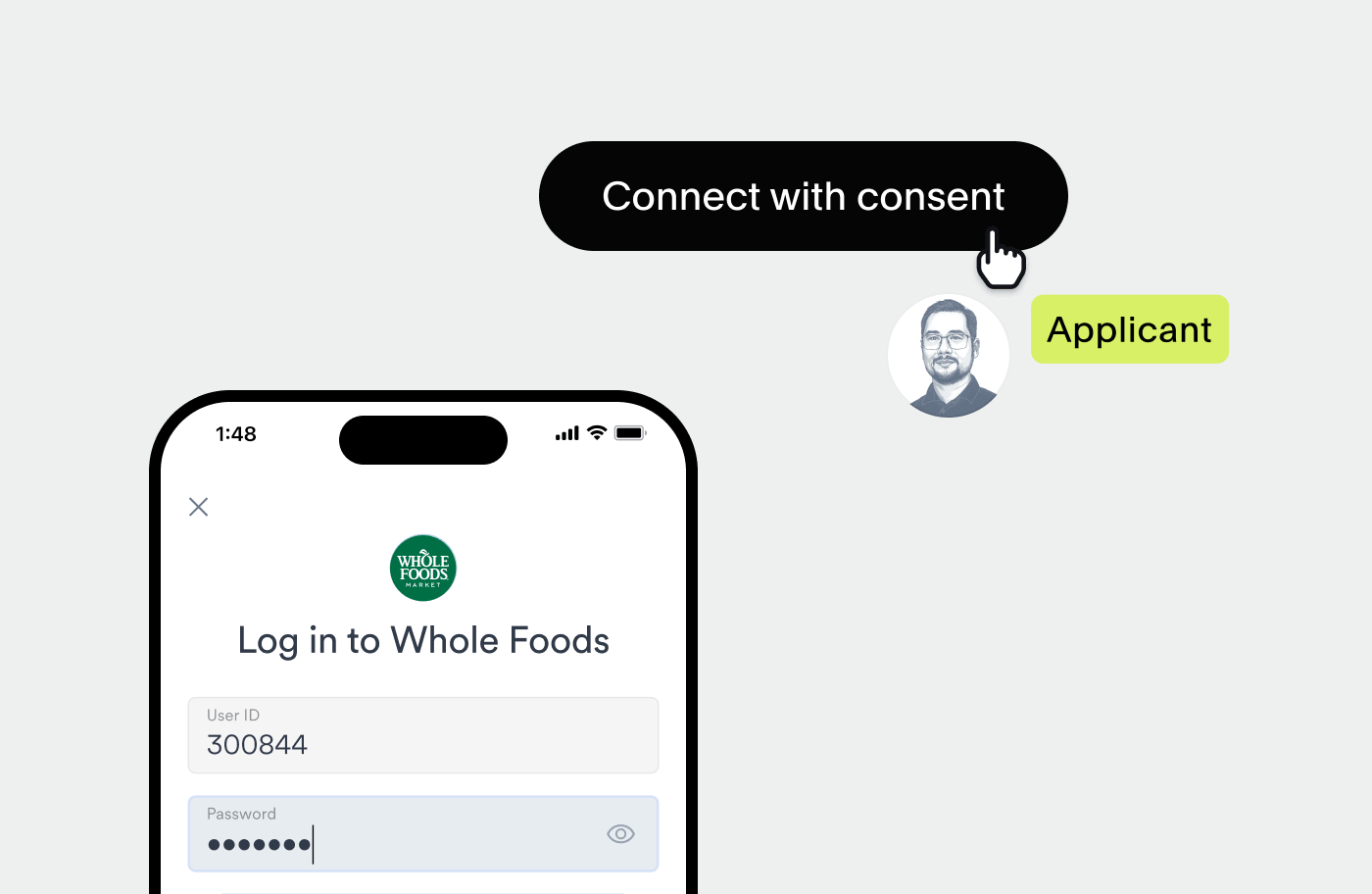
Consumers log into their payroll or banking account and, at their direction, share income, employment, or asset information directly from the source in real time, using the CBV platform. Meanwhile, consumers maintain complete control over what they share, with whom, and for how long. Critically, they can also revoke access at any time.
This approach delivers several advantages over legacy methods:
- Verification costs can be up to 80% lower than traditional database providers and manual methods
- Real-time data comes directly from the source of truth rather than potentially outdated aggregated records
- Coverage extends to gig workers and other non-traditional employment arrangements
- Consumers have transparency and control over their own information
Five forces driving CBV’s breakthrough in 2026
While CBV technology has been around for some time, it is just now reaching critical adoption thanks to a number of factors outlined below.
1. Demands for lower costs and better coverage undermine TWN’s hold on the market
For decades, employment, income, and asset verification has been dominated by database providers like TWN. While these databases offer convenience, they come with significant limitations that organizations increasingly find unacceptable.
At the top of the list of concerns is cost. A recent analysis by Stifel found that TWN raised prices on mortgage processors an average of 9% in 2025, with nearly 32% of respondents reporting a price increase of 10-20% and almost 20% of respondents paying more than $200 on a per-use basis. This price increase follows a double-digit average price hike the year prior and an 80% increase between 2017 and 2023.
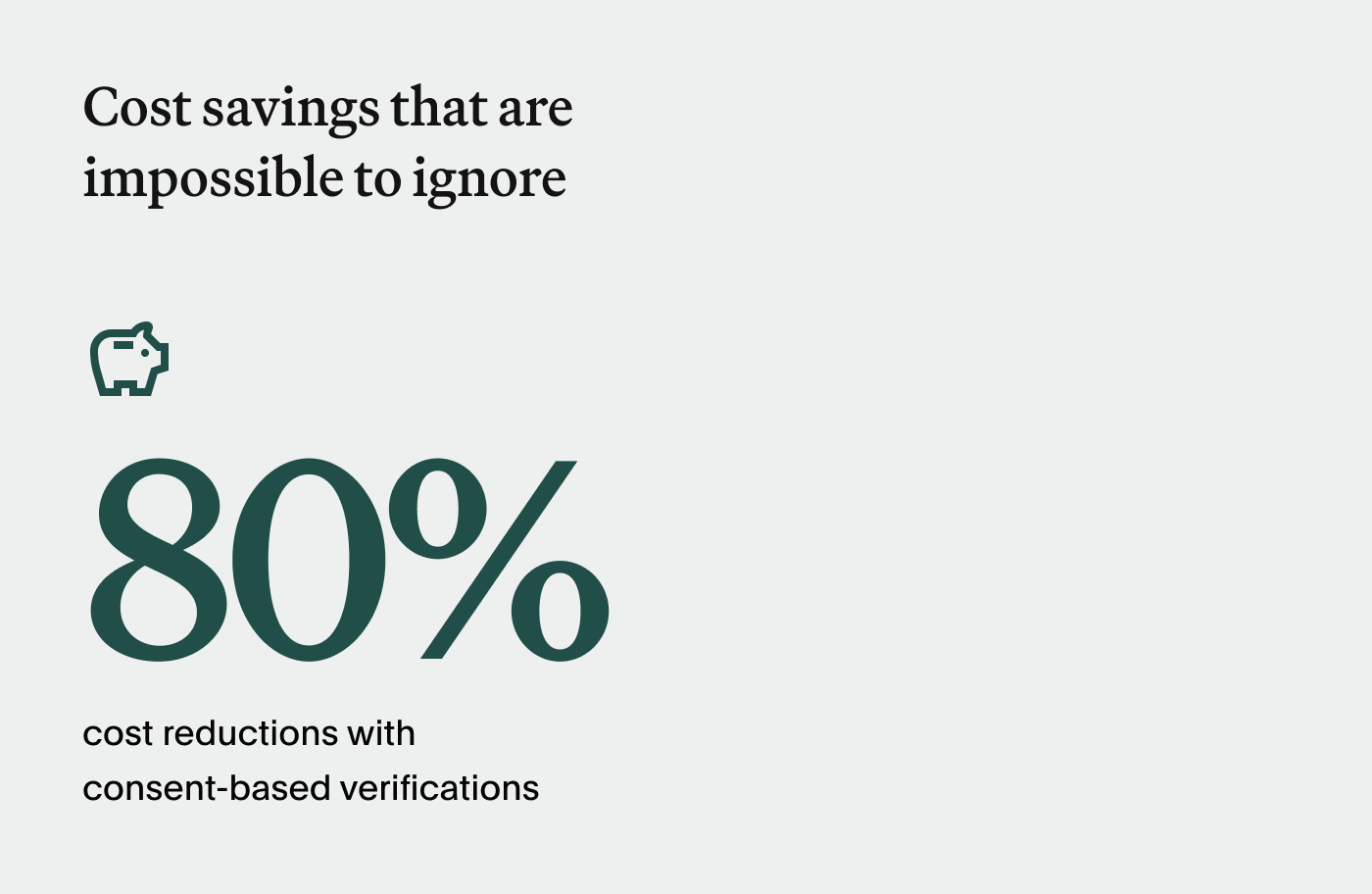
As a result, organizations facing budget constraints find CBV's up to 80% cost reductions impossible to ignore, especially when combined with improved data quality and expanded coverage. Because CBV data comes directly from the source in real time, it avoids the delays inherent in batch database updates. Meanwhile, CBV's direct connections cover gig workers on platforms like Uber and DoorDash alongside traditional W-2 employees, providing verification for over 90% of the U.S. workforce.
The same Stifel study found that 42% of mortgage processors said that they recently shifted volume away from TWN, with a large majority (83%) citing price considerations as their motivating factor followed by coverage. And the majority of these processors traded TWN for CBV options like Argyle. As awareness grows about CBV alternatives, 2026 is likely to see accelerating movement away from expensive legacy databases toward consumer-directed options that deliver better results at lower cost.
2. Open banking's building momentum
The Consumer Financial Protection Bureau's (CFPB) Personal Financial Data Rights Rule, finalized in October 2024, will fundamentally reshape how financial data flows through the economy.
The rule stipulates that financial institutions provide consumers access to their personal financial data through secure digital interfaces at no cost. It also stipulates that data sharing should only occur at the consumer's direction. Covered data includes transaction information, account balances, payment initiation data, and account verification information.
The rule doesn't just regulate banks—it normalizes consumer-directed data exchange as the default architecture for financial information. And while it doesn't technically cover income and employment data from payroll systems, it establishes a clear regulatory precedent for consumer-directed data sharing that will likely extend to other types of financial information in future rulemakings. Forward-thinking organizations recognize this trajectory and are future-proofing their data infrastructure by adopting consent-based approaches across all verification workflows.
3. Fannie Mae and Freddie Mac embrace alternative data
Fannie Mae and Freddie Mac continue modernizing their requirements to expand access to homeownership. In 2025, the GSEs committed to accepting newer credit scores incorporating nontraditional data that consent-based verification platforms can provide through direct access to banking and transaction information. And before that, consent-based income, employment, and asset providers were added by the GSEs as approved verification vendors.
Argyle, for example, serves as an authorized report supplier for Fannie Mae's Desktop Underwriter validation service and an approved service provider for Freddie Mac's Loan Product Advisor asset and income modeler. This GSE approval validates the accuracy and reliability of consumer-directed verification for mortgage underwriting and creates momentum for CBV adoption across the entire mortgage ecosystem, from large national lenders to community banks and credit unions.
4. New government benefit program verification requirements
Thanks to 2025's H.R. 1 (The Big Beautiful Bill Act), government agencies administering benefits programs face new income and employment verification requirements, making CBV solutions essential rather than optional.
The new requirements affect multiple benefit programs. State agencies administering SNAP benefits, for example, must now meet stricter error rate thresholds on their benefits calculations. Because the error rate is a direct reflection of income verification accuracy, agencies are turning to CBV technology, which delivers applicants' income data in real time from the source of truth, significantly reducing the possibility of mistakes that could result in stiff penalties.
When verification fails, families wait. Caseworkers chase documents. Benefits are delayed. Consent-based verification reduces this friction because applicants share their data directly from the source in real time — shortening processing cycles while improving confidence in eligibility determinations.
New verification requirements also extend to Medicaid. Now, states must verify that able-bodied recipients complete 80 hours of community engagement activities each month. Oftentimes, the level of employment data granularity needed to meet this requirement is not readily available through verification databases. Community engagement requirements demand recurring, time-sensitive verification — not static snapshots. Legacy databases were not designed for this cadence. Furthermore, verification databases don't widely cover the gig economy, which many Medicaid applicants and recipients rely on to accumulate work hours.
To meet this new demand, Gainwell Technologies announced a major expansion of its community engagement verification platform to include a direct integration with Argyle, bringing consumer-directed income verification through direct payroll and banking connections to state Medicaid and SNAP programs.
Meanwhile, Argyle also secured a contract on the United States General Services Administration's Multiple Award Schedule (MAS). The GSA MAS is a long-standing federal procurement program that gives state and federal agencies streamlined access to pre-vetted technology vendors at pre-negotiated pricing. Argyle's inclusion enables government agencies to procure CBV capabilities more quickly and cost-effectively, without navigating complex RFP processes or vendor evaluation procedures.
Together, these milestones signal that government agencies view CBV not as experimental technology, but as production-ready infrastructure for mission-critical programs serving millions of Americans.
5. Fintech and HR tech infrastructure reaches new level of maturity
The effect of all of these factors on CBV adaptation is possible because the technology infrastructure supporting consent-based verification has reached critical maturity. Coverage that includes Fortune 1000 and major gig platforms mean CBV platforms can verify income and employment across the workforce. At the same time, API-first architectures enable rapid implementation, with some organizations completing integrations in as little as one day using web-based interfaces.
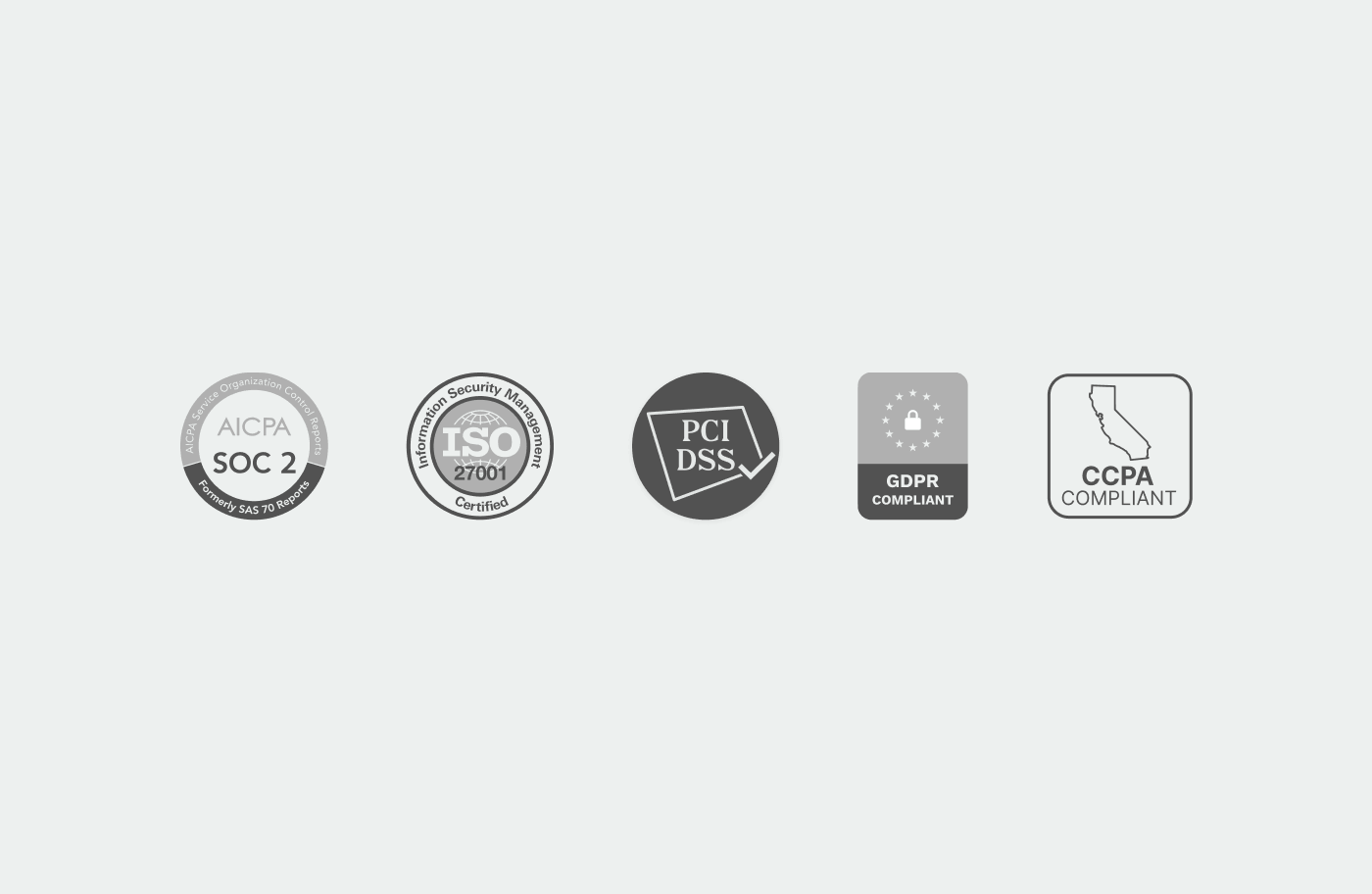
Security standards have matured alongside coverage expansion, with leading CBV platforms achieving SOC 2, ISO 27001, PCI DSS, GDPR, and CCPA compliance. This combination of coverage, integration ease, and security gives organizations confidence to adopt consumer-directed verification as primary infrastructure rather than a supplemental tool.
Moreover, employers themselves are modernizing through cloud-based HR systems, digital payroll platforms, and API-enabled data sharing. When employees can direct verification at their own initiative, using the same digital credentials they use to access paystubs and W-2s, the verification process becomes nearly instantaneous. This evolution in employer technology removes friction that previously made traditional database approaches seem like the only viable option.
Why state agencies are paying attention to CBV now
- SNAP error rate penalties have become financially material
- Medicaid work requirements require recurring employment validation
- Eligibility modernization initiatives are already underway
- GSA MAS procurement reduces adoption barriers
The convergence creating critical mass
What makes 2026 the breakthrough year isn't any single development—it's how these forces converge to create conditions where CBV adoption becomes inevitable:
- Regulatory pressure from H.R. 1, CFPB rules, and GSE modernization all point toward consumer-directed data sharing as the compliance path forward.
- Government procurement access through GSA MAS approval removes barriers that historically prevented agencies from adopting modern verification.
- Cost imperatives make up to 80% reductions impossible to ignore when organizations face budget constraints.
- Technological maturity means coverage, integrations, and security standards can support enterprise-scale deployments.
- Consumer expectations around data privacy align with direction-based approaches that give individuals control over their information.
For government agencies and service providers still relying on manual document collection or legacy database verification, 2026 represents both opportunity and urgency. Organizations that embrace consumer-directed verification this year will benefit from:
- Operational efficiency through automated workflows that reduce manual processing burden and allow staff to focus on complex cases requiring human judgment.
- Improved accuracy from direct-source, real-time data that reduces errors and fraud while providing complete visibility into applicant financial situations.
- Better applicant experiences through streamlined verification with fewer document requests, creating smoother journeys for consumers accessing benefits, loans, housing, or employment.
- Compliance readiness that makes meeting federal mandates and regulatory requirements more manageable with modern verification infrastructure.
- Cost savings from reduced verification expenses and operational efficiencies that free resources for mission-critical activities.
Verification is becoming infrastructure
In 2026, organizations that continue relying on static databases and manual document uploads will find themselves out of alignment with regulatory direction, consumer expectations, and operational realities.
The question is no longer whether consent-based verification works—it's whether institutions are ready to make it foundational.